












Are you frustrated that your videos get clicks but lose viewers just a few seconds in? It’s not a mystery; attention spans are tanking.
According to Animoto, users often decide whether to stick around within the first three seconds. On TikTok, more specifically, the average watch time hovers around 15–20 seconds.
Even on YouTube’s Shorts format, cryptic data suggests a brutal drop-off in the earliest moments, while the algorithm loves videos that hit the first moments well.
Based on this data, it’s obvious that the opener you use matters a lot for performance. Strong hooks raise 3-second hold rates and signal to the platform, “this is worth showing more people,” increasing reach and retention.
P.S. Explore how Fieldtrip’s strategy services guide brands from creative testing and audience psychology to higher ROI.
An ad hook is the opening line, visual, or concept that makes someone stop scrolling and keeps watching.
It’s the foundation of successful video marketing, and content creators use it to increase attention spans.
And with research showing that 90% of ad recall impact happens within the first 6 seconds, getting viewers’ attention is key.
Why Some Hooks Keep Us Watching (and Others Don’t)
Dopamine drives curiosity. When viewers sense a gap between expectation and payoff, the brain lights up, thanks to predictive coding.
Creators who use pattern interrupts and open loops like, "You’ll never guess what happened next…" spark that anticipation, turning quick scrolls into sustained watch time.
When you open with, “You won’t believe what happened…” you’re triggering a dopamine-driven curiosity loop that keeps viewers watching beyond the 10-second drop-off.
In fact, neuroscience confirms dopamine spikes during anticipation enhance time perception and motivation, sustaining digital attention longer than instant gratification.
Curiosity-based openers, questions, teases, or cliffhangers work because they promise a payoff the brain craves to complete.
Remember: Use these gaps responsibly: authentic curiosity builds trust, while clickbait breaks it and kills long-term retention.
According to Diana Briceno, you usually have only about 2.7 seconds before viewers decide to drop off.
Pattern interrupts are your secret weapon to avoid that. These are surprise shifts in camera angle, abrupt text overlays, or sound cues that break autopilot and refocus your viewers’ attention.

Since creative pattern interrupts can increase engagement, it makes sense to incorporate them in your video marketing efforts.
As a content creator, you’ll notice that clean, focused openers outperform cluttered ones in watch-time performance.
This lines up with studies that indicate that the average attention span for video is about 8.25 seconds, and around 20% of viewers drop off within the first 10 seconds, as it’s easier to stand out and grab attention.
Insider tip: Create a “sound-off” version with bold text and strong visuals so even when muted (as in many virtual reality videos), your message remains clear.
The examples in this guide include these to varying degrees, so keep reading below to see them in action.
Next, we’ll explore five high-impact hook types every content creator should test using AI tools and A/B testing to maximize viewer retention.
Transformation hooks put the payoff front and center: we quickly see the messy “before” and a compelling “after.” Good marketing agencies know that, if you’re focused on watch time, this hook elevates your video marketing results.
These hooks work because viewers immediately understand what’s at stake and want to see the full journey. They’re also known as “speed and transformation” or “investment” hooks, promising a clear outcome if people stay.
Insider tip: Overlay your “after” result in the first three seconds. So even if the viewer scrolls away, the payoff is already implied.
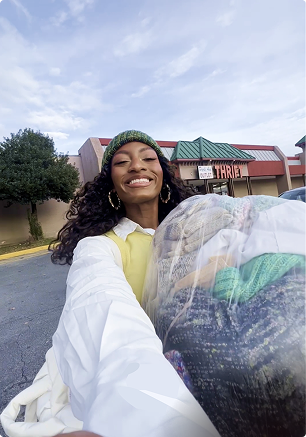
This Carpe UGC ticks all the right boxes of a transformation hook.
Curiosity hooks open a loop your audience feels compelled to close. You make an unexpected claim or ask a question, but hold back the answer. That gap keeps dopamine and attention high, and can significantly lift retention.
Don’t take our word for it: Research shows videos with strong opening questions can see over 60% higher retention rates than those without.
This short video our influencer created for Genomelink opens with the line, “So most people who have taken a DNA test do not know this.”
The vague statement leaves you feeling intrigued, waiting to discover what it is that people who’ve taken DNA tests don’t know.
These curiosity hooks are also known as controversial hooks. And prompts like, “How do I know if…?” all ride on this mechanic of piquing your interest.
Insider tip: The key is to pair intrigue with relevance: the question must point directly at a tension your ICP already feels in their day-to-day life.
Instant value hooks win by giving something away fast: a framework, a number, a line they can steal. Instead of “wait and you’ll see,” you open with the payoff and then unpack how you got there.
But why would a content creator use this hook?
Because viewers decide within seconds whether to stay.
Videos under 90 seconds have a 50% viewer retention rate. So if a strong retention is one of your key video marketing KPIs, prioritize instant value hooks to keep your viewers engaged.
Bonus: you can earn a stronger push from the platform’s algorithm because retention is one of the strongest signals platforms use to boost your video’s reach.
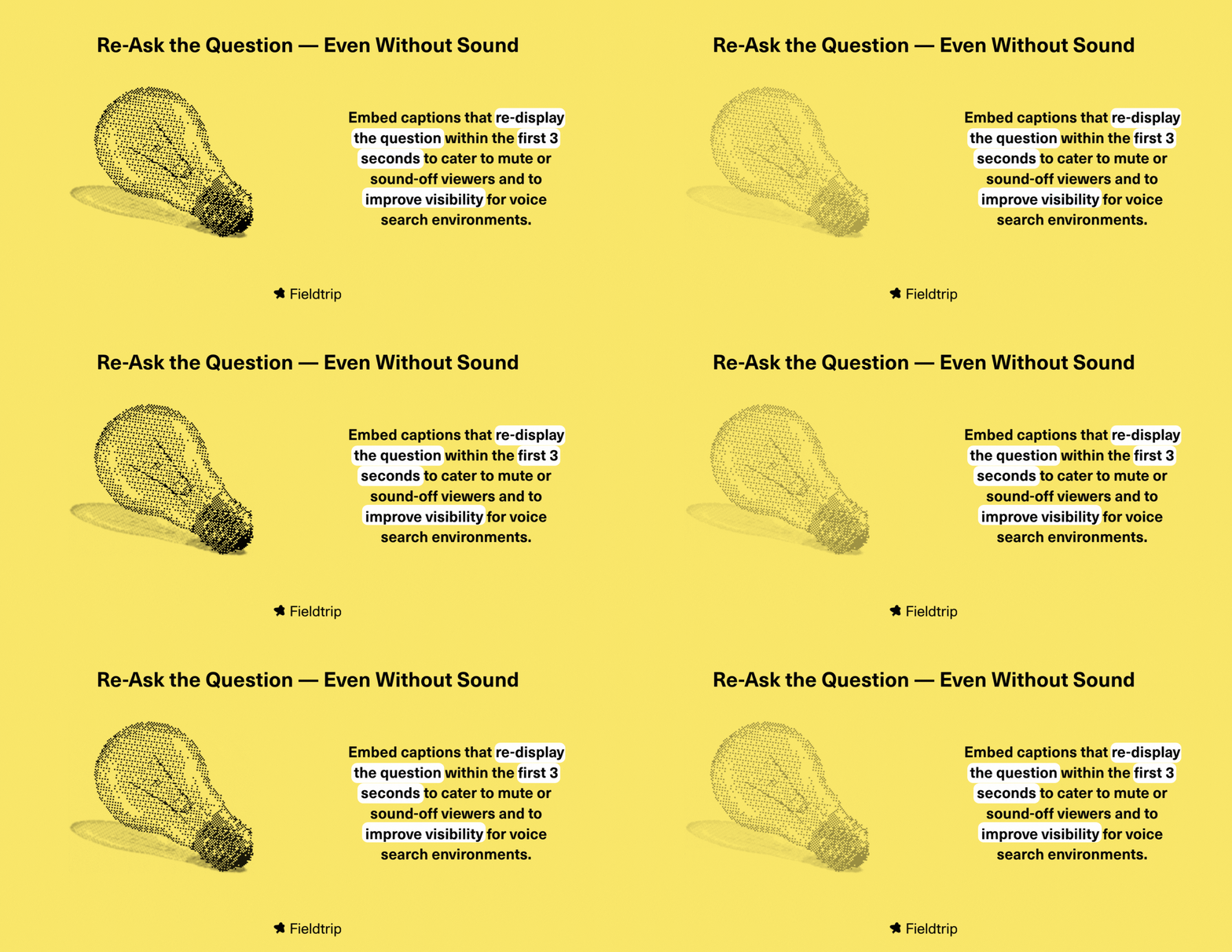
Insider tip: State the benefit visually (e.g., "Save 2 hours today"). Design your bold visual hook to be mute-proof so it works even when viewers have their sound off.
Dashing Diva is one of our success stories, having decreased their CAC by 24%. Using hooks smartly was one of the most effective strategies to get them there.
For instance, this Dashing Diva TikTok video opens with the verbal hook, ”Things I refuse to stop buying no matter how strapped I am for cash,” and immediately lists off the items.
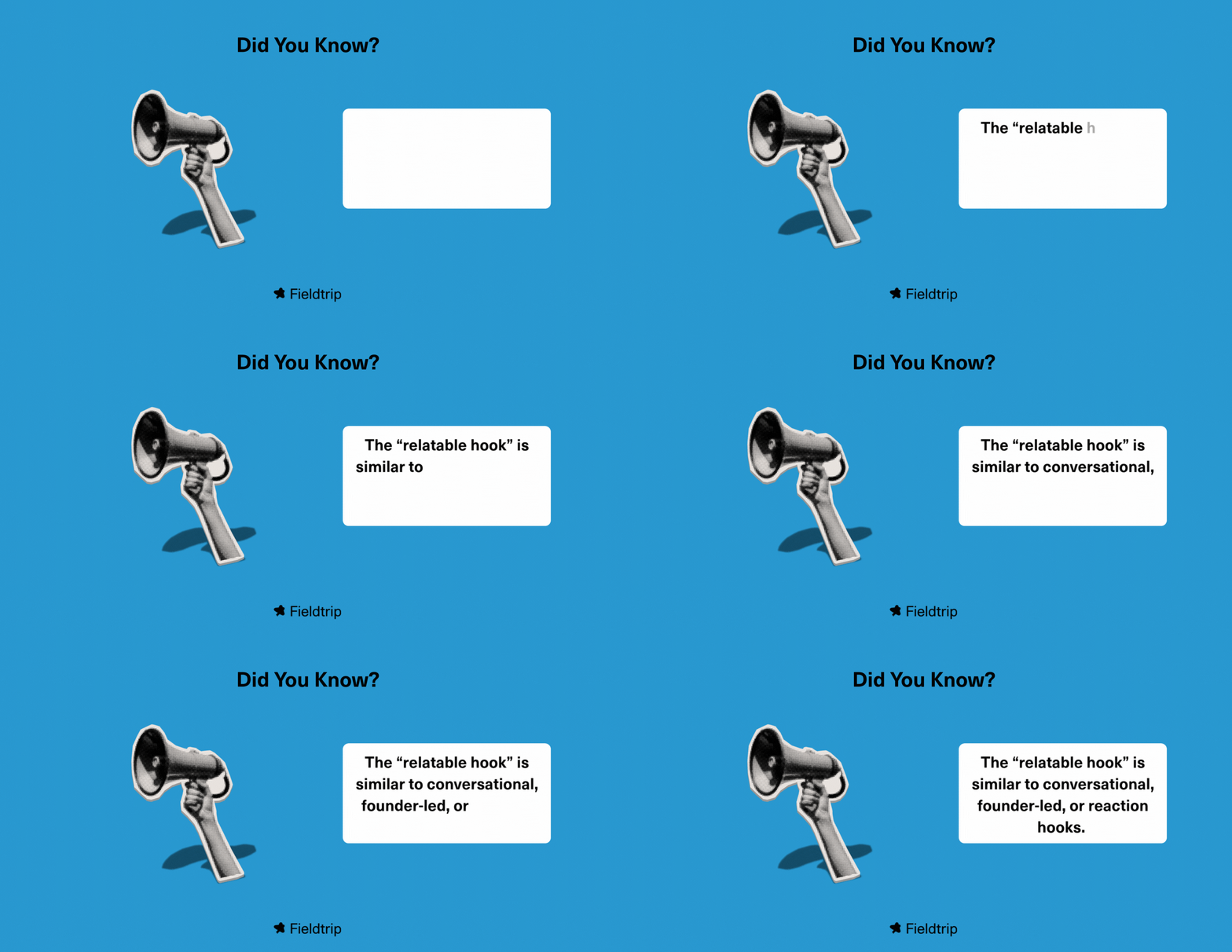
Relatable hooks mirror how your audience actually talks, behaves, and complains. They feel like a friend sending a voice note, not a brand reciting a script. They work because they dramatize a moment that your viewers resonate with.
A strong example comes from a divorce attorney on Instagram. She creates relatable reels about recently divorced clients, like how they’re rediscovering dating and giving out their phone numbers to new potential partners.
When you lead with something like “In the next 30 seconds you’ll discover…” or “Here’s what nobody tells you…” you’re using a prediction hook; a subtle promise that builds anticipation and keeps viewers watching to verify your claim.
In this short video, a content creator introduces BTS’s commercial with our client, Mogu Mogu, by stating that the music group was “apparently drinking a drink you can drink and chew at the same time.”
This opener builds anticipation and makes the viewer stick around to find out if it’s true.
This opening overlaps with trigger-based and “multiples” hooks, where you signal that several interesting beats are coming.
Insider tip: Include a visual countdown or animated overlay for the first 3 seconds; this works especially well for viewers watching muted and signals that the promised payoff is indeed coming.
Note that your promise has to be specific enough to feel real, but open enough to build suspense. Done well, it escalates the tension toward the reveal.
Nothing feels more human on a feed full of AI-polished graphics than handwriting. These hooks mimic the intimacy of someone jotting down a note. They’re like a personal touch that drives user engagement and improves click-through rates on social platforms.
You’ve probably seen this style in Spark Ads or Instagram Reels, where creators write on-screen phrases like “Ooh, didn’t know that” or “3 habits that changed everything” as the video begins.
Here’s how we used this hook for our client, National Debt Relief, to bring this credit score app 750+ new users monthly:

The effect makes viewers pause, read, and stay for the explanation. This kind of relatable setup leads to strong conversion rates. Here’s how to create one:
Of course, keep it authentic. Use handwriting overlays or tablet captures instead of sterile fonts, and pair them with a strong call to action in the caption.
Pro tip: Want to design the same kind of impactful hooks but not sure how? Here’s a shortlist of the best advertising agencies who can bring you the right results, with the right hooks.
FOMO hooks rely on scarcity (time, access, or opportunity) to influence consumer behavior and push instant action. A coffee brand, for example, can run an ad campaign announcing “Only 100 cold-brew kits left” with a live countdown bar.
This is a good example, too:
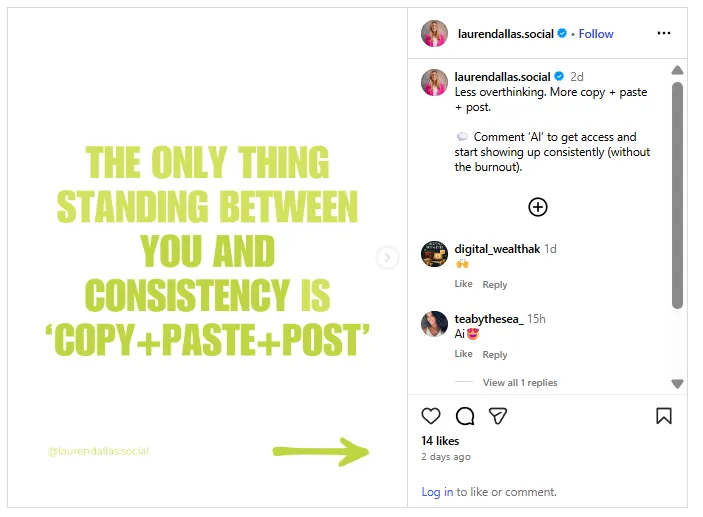
Even if you sell fast, the replay clip will drive even more engagement as viewers rush to see what they missed.
Social platforms reward that reaction loop. When people comment or share quickly, ad performance improves, and algorithms extend reach. Used strategically, FOMO hooks lift conversion rates and reinforce brand recognition, since audiences associate your brand with timely, high-value drops.
Superlatives tap into our bias toward extremes: “the fastest,” “the rarest,” “the only.” They work because they promise something extraordinary. Take our client Hurom promoting itself like this through short video ads backed by user-generated content:
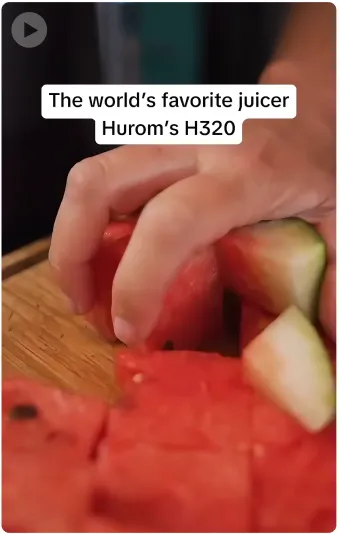
Superlative hooks perform best when supported by visuals or data, not just adjectives. They naturally lift click-through rates and brand recognition by positioning your product as the benchmark in its category.
People can’t look away from tension, and that’s exactly why discomfort hooks work. They start with unease, curiosity, or even embarrassment, and then relieve it with a payoff.
This is a good example because the creator starts with an image of her loose abdominal skin:
Discomfort hooks rewire consumer behavior because they mirror real emotions.
They pull people in through recognition and reward them with relief. That’s the kind of storytelling arc that boosts retention and ad performance without relying on gimmicks.
Few formats stop a scroll faster than an oddly satisfying visual. Whether it’s paint being mixed, a logo carved with precision, or a drone shot aligning perfectly with a beat, this type of sensory pleasure drives dopamine and replay value.
Pro tip: You need looping HD videos framed with ASMR-style audio to create pure sensory delight. Besides, these hooks thrive on visual elements and smooth editing.
The dairy brand Noosa created a campaign featuring “oddly satisfying” visuals: close-ups of yogurt being drizzled, berries falling, and foam swirling, like so:
Next, we’ll share our in-house expert tips and advice for content creators on crafting high-retention video hooks using AI tools, A/B testing, and voice search.
Your verbal hook, the first spoken line, must land fast and land strong because data shows viewers decide within the first 3–8 seconds whether to watch or swipe away from YouTube videos.
Tone and pacing also play a major role in predicting engagement, shaping emotional response, and perceived value. To find out what works, use AI tools to test variants like “What nobody tells you about…” versus “Here’s how I doubled watch time in 24 hours.”
Through A/B testing, you’ll find which tone your audience responds to: whether educational, direct, or provocative.
Visual hooks are your first opportunity to halt the scroll and engage the viewer, so use bold text overlays, contrasting motion, or unexpected camera angles to capture attention. Bright-color hooks also work very well.
This is supported by Vidmob’s Creative Trends 2024 report, which revealed that high-contrast colours led to a 68% increase in video completion rates.
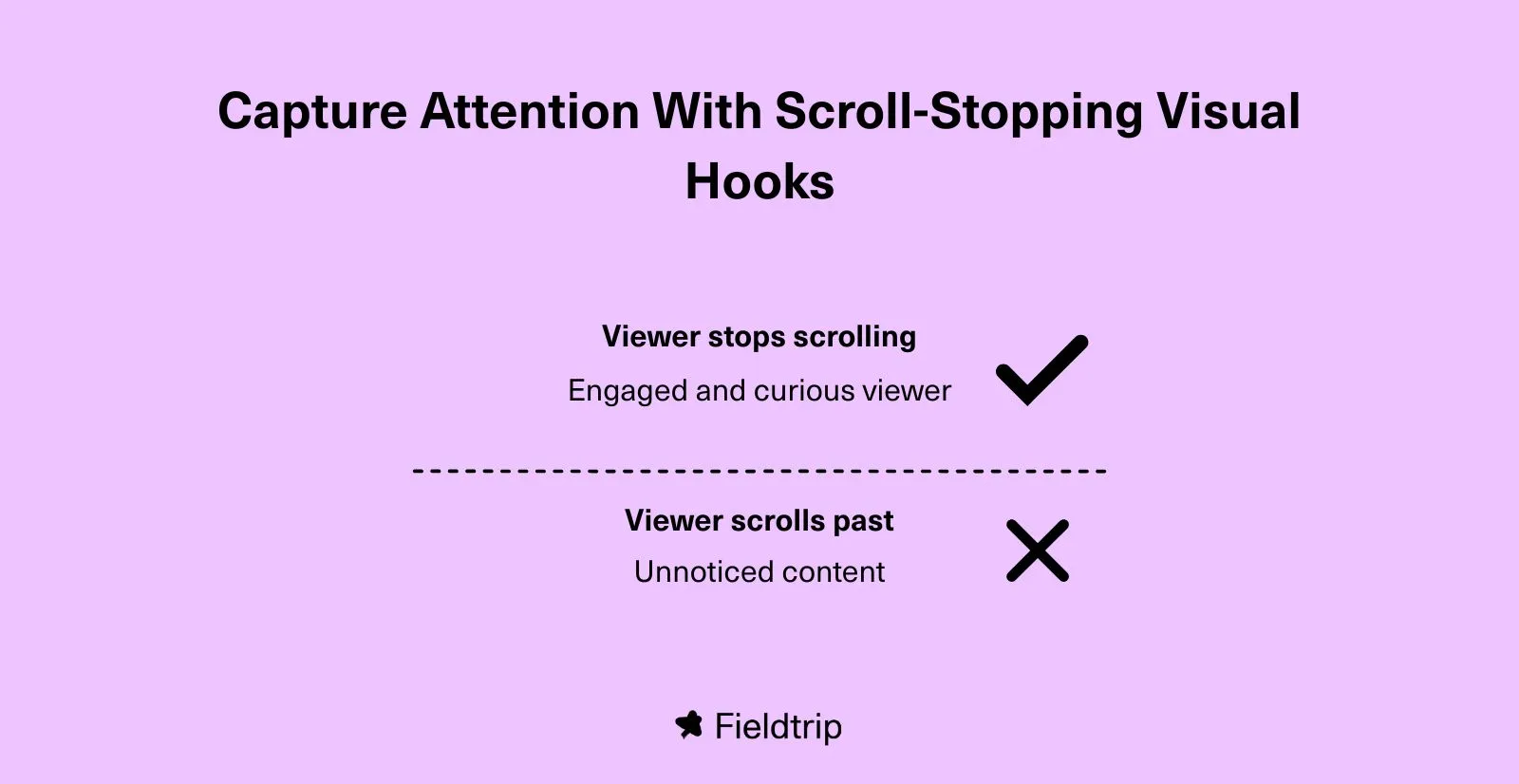
For scroll-stopping visual hooks, edit for clarity under 3 seconds: tight framing, strong contrast, and a single visual challenge (e.g., “What’s behind the door?”) work best.
The most effective hooks feel like story openings, inviting viewers to stay for the resolution.
Storytelling works because it increases recall: people retain up to 70% of information shared through narrative versus just 10% from facts.
Great examples of storytelling in video marketing include branded videos like Dove’s “Real Beauty Sketches”, which show how emotional momentum sustains watch time beyond the hook.
To aid your storytelling, use AI tools to previsualize micro-story arcs and A/B test whether conflict-led or resolution-led openings hold attention longer.
Understanding creative intent is only half the story. Next, we’ll explore how algorithms interpret hooks to boost visibility and retention.
Content creators focused on video marketing need to move beyond just focusing on clicks and now prioritize how long viewers stay.
According to EMARKETER*, YouTube's algorithm-weighted metrics show that watch time and retention influence reach more than CTR.
And strong hooks directly influence these metrics: the longer viewers stay past the first 10 seconds, the stronger the algorithm’s signal that your content delivers value, driving higher visibility, longer sessions, and repeat views.
Note: The full EMARKETER 2025 report is available to Pro+ subscribers; however, the cited findings are publicly accessible and verifiable.
Video alone won’t cut it in video marketing; you need quality engagement signals such as comments, shares, and replays. All these drive your content’s discovery.
Recent data support this, showing that retention paired with higher interaction (i.e., comments, likes, and shares) correlates with stronger promotion by the algorithm.
Insider tip: Include an emotional hook within the first 5 seconds (e.g., “Comment if you’ve been there…”), so even when a viewer is scrolling sound-off or using voice search, the invitation to engage is already visible, possibly increasing engagement.
Content creators can measure and improve the performance of their hooks through analytics, AI tools, and A/B testing.
For content creators in video marketing, analytics are a goldmine of tips and advice for improving hooks and openers.
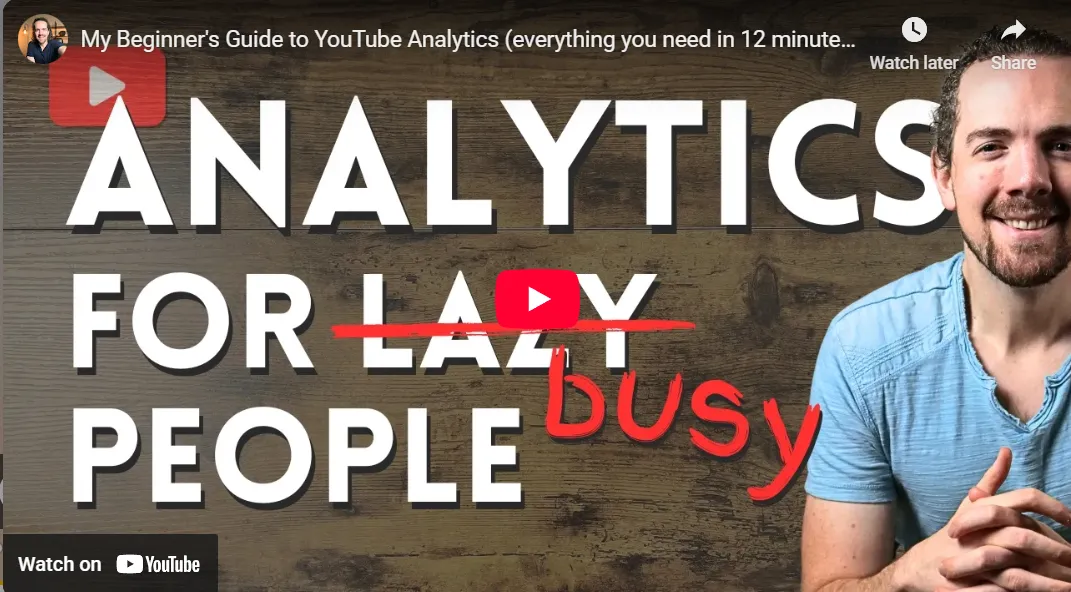
Start by reading your drop-off graphs like a timeline of audience interest, especially the first 10 seconds, to spot where attention dips. Then, compare the results of mute and sound-on viewers to test universal appeal.
Next, identify recurring predictors of watch time, clear visuals, emotional tone, pacing, and payoff alignment.
Then, connect these insights to content type (e.g., educational, promotional, story-driven, etc) to determine which formats keep audiences engaged.
Even small tweaks to your hooks can reshape your retention curve.
For example, start by duplicating the same video with two different openers: one that asks a question and one that makes a bold statement.
Then run A/B testing on your video marketing platform (e.g., Instagram Reels or YouTube Shorts) and compare metrics such as the 3-second hold rate, 10-second retention, and replays to determine what works.
Insider tip: Check YouTube or platforms like TubeBuddy during your A/B testing to track which phrasing or pacing patterns consistently hold attention longer.
AI tools help forecast which hooks sustain attention.
Using various prompts, ChatGPT can analyze your opener’s phrasing and emotional pull, while OpusClip scores visual pacing and scene energy.
Combine these tools to guide your creative planning.
Then:
Ongoing iteration is the key to improving your video marketing efforts; adjusting your videos based on viewer behavior can increase watch time, as you’ll know what to cut, keep, or amplify.
Adjusting your hooks and pacing based on real marketing data (and not “feels”), small lifts increase over time.
This improves your average view duration and completion rates, helping you exceed the benchmarks for short-form video content.
Completion rates to beat per platform are:
Different platforms reward different hook dynamics. Let’s break these down next.
The opening second matters most on platforms like TikTok and Instagram Reels, where users make instant decisions on whether to keep watching (or scroll instead).
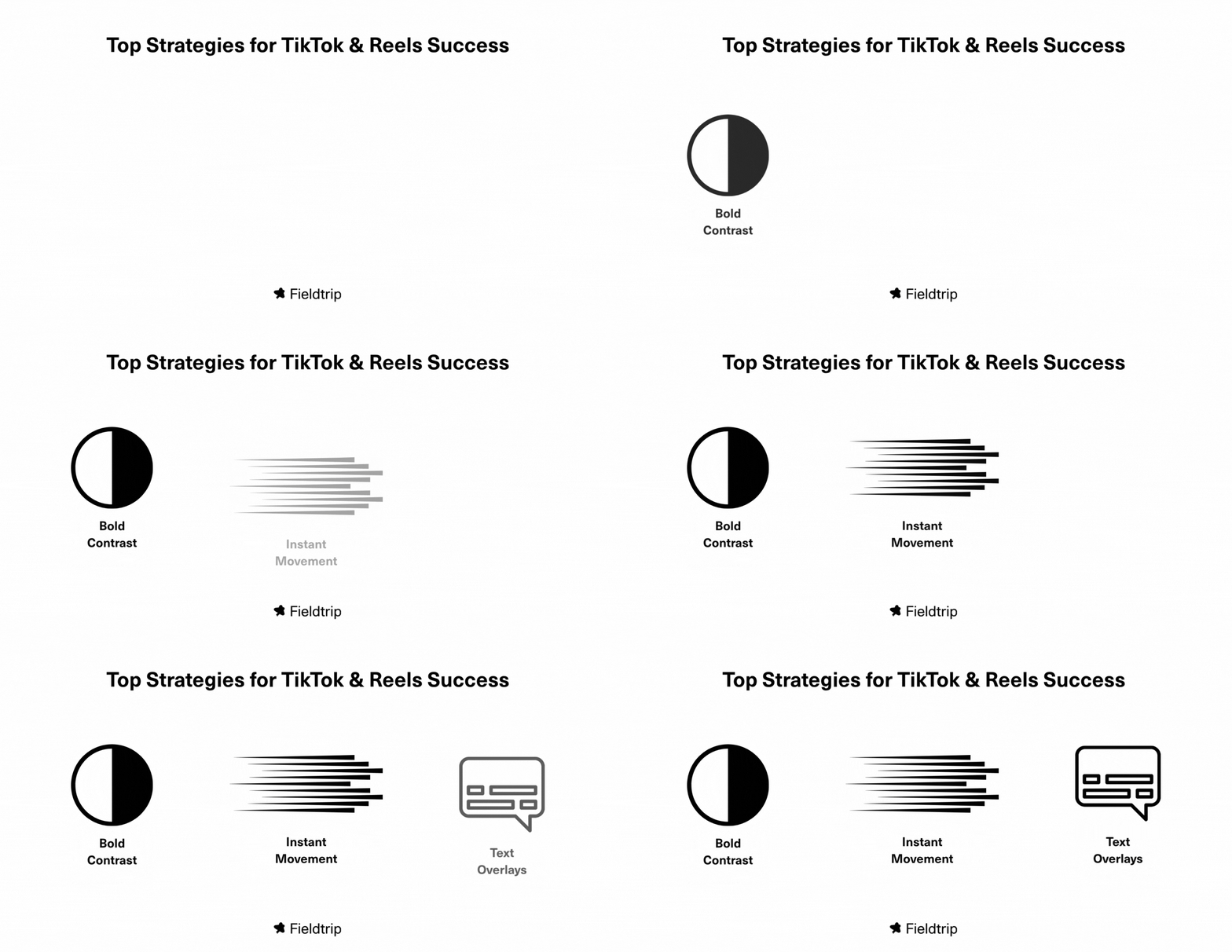
Considering that the median drop-off on TikTok and Reels is around the 3-second mark, you should use bold contrast, instant movement, and text overlays that loop visually or flip patterns between shots.
Plus, keep your verbal intros short; one line max. And test your first-frame variants through A/B testing to increase early retention.
When it comes to YouTube video marketing, retention depends on consistency: do your hooks match the tone, pacing, and promise of the full video?
If not, your viewers won’t stay and won’t subscribe. You want to pair your videos with aligned openers to improve your view-through rate.
To win, have authentic, narrative-led hooks that’ll outperform clickbait or shock intros by building trust and emotional continuity with viewers.
On LinkedIn and Facebook, context and credibility drive engagement.
Since audiences on these platforms reward relevance, open with authority-building cues like credible stats or quotes.
Insider tip: Use AI tools to draft two hook variants, a data-led and a story-led version, and A/B test which once builds stronger trust with viewers. That’s the one to use in your video marketing on Facebook and LinkedIn.
Lastly, connect your opener to collective insights that make your viewers feel part of an informed conversation worth having.
Most creators lose viewers early, not because their content lacks value, but because their openings don’t earn attention fast enough.
Strengthening your first 3 seconds can transform curiosity into consistent viewing. And if you bridge creativity with data, you can design openers that both engage people and signal quality to the algorithm.
In video marketing, anticipation creates interest, clarity builds trust, and iteration amplifies results.
So partner with Fieldtrip for a retention-first creative strategy that turns every hook into momentum.
You want the hook in your TikTok video marketing to stop the scroll within the first 2–3 seconds. Studies show healthy and top-performing TikTok ads have hook rates of 30%+ and 40%+, respectively. So, start with strong visuals, then drop a benefit or question, like “Want 500K views in 30 seconds?”
By stating the value fast, using a bold pattern interrupt, and matching the tone of the platform, you can hook viewers on TikTok. According to Social Cat, videos with clear value in the first 5–10 seconds can increase retention by ~20%. To achieve this, treat your hook like a funnel stage and think: hook → payoff → action.
Your social media hooks must be concise, visually bold, and speak directly to the viewer. To speed things up, you can use AI tools to generate multiple short-form openings. Be sure to include captioned text or graphic overlays so they work even with muted autoplay or voice search.
Among various hook types, those that promise transformation (before/ after), pose a curiosity question, deliver instant value, or hint at what’s coming next tend to drive higher average view duration. Achieving strong hook + hold metrics helps the algorithm favor your video marketing content.
For performance-driven video marketing, A/B testing is essential. Create two or more versions of the same video’s first 3-10 seconds with different hook types or visuals, upload them to comparable audiences, and review retention curves, watch time, and engagement to help you evaluate which hooks predict higher watch time